Cardboard projects
How to make a cardboard ramp for toy cars.
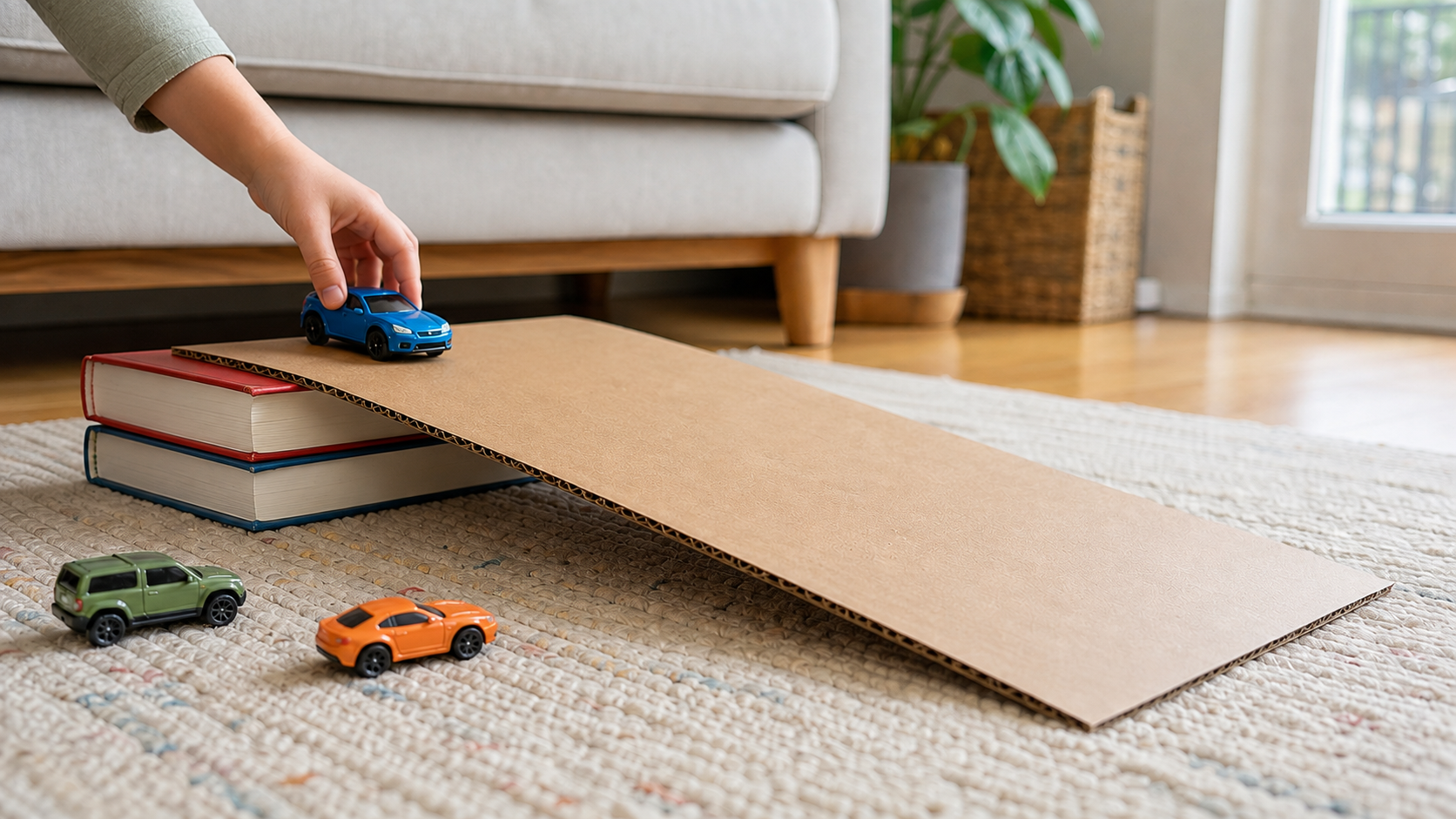
Put one flat piece of cardboard on a low stack of books, release a toy car from the top, then change one part of the setup if you want to compare what happens.
Start now: make a cardboard ramp
Use: one flat, stiff piece of cardboard, two broad sturdy closed books, and one or more toy cars.
- Put the two books flat on the floor, one on top of the other.
- Lean one end of the cardboard on the books and let the other end rest on the floor.
- Release one car from the top without pushing. Keep playing, or change one thing below.
Adult job: Set up on the floor, check that the two books stay flat, and hold the cardboard if it slips. Stop if anyone starts climbing on or throwing the setup.
Quick Verdict
Start with the no-cut version. Skip rails, tunnels, lanes, and decorations until the basic slope works. The first setup needs only cardboard, two books, and toy cars.
Start with the simplest useful version: cardboard plus books plus cars. If the ramp works, leave it alone for free play or add one change at a time.
What You Need
- One flat piece of cardboard, about the size of a shipping box side
- Two broad, sturdy closed books for a low support
- Two toy cars with wheels that turn freely
- Optional: painter's tape if the cardboard keeps slipping
You do not need scissors, glue, a box cutter, markers, side rails, or a perfect piece of cardboard.
Best cardboard for a toy car ramp
The easiest ramp is one flat, stiff piece of cardboard. A shipping box side or large box flap works better than a whole box because it sits flat and does not need cutting. If the cardboard bends in the middle, use a shorter piece or put the books closer to the middle. Skip thin cereal-box cardboard unless you are using very small cars.
Check the setup before the first roll
- Press the cardboard lightly to see whether the books or ramp slide.
- Clear a landing area at the bottom so the car is not aimed at feet, breakable objects, or stairs.
- Test one car yourself. If it stops, use a shorter piece of cardboard or move the support closer to the middle.
If the setup starts needing rails, braces, or a large stack, return to a lower support and a shorter piece of cardboard.
What To Say While They Play
Offer one short prompt, then leave room for the child to roll cars or change the story.
- "Which car do you want to try first?"
- "Where do you think it will stop?"
- "What did you notice?"
- "Which one thing should we change?"
Try one change at a time
Run the basic ramp once. Then choose one comparison below and keep the other parts of the setup the same.
- Ask for a prediction.
- Release the car from the same spot without pushing.
- Place a scrap of paper beside where it stops.
- Make the one chosen change and roll again.
One comparison is enough. Repeat it if the child wants to; otherwise, return to free play.
Activity sources: This change-one-thing structure is adapted from the inquiry patterns in PNC Grow Up Great's Rolling with Ramps, PEEP's Roll or Slide activity, and PBS's Cars on Ramps demonstration. Kid Activity Lab has not recorded a parent test of this page.
For a deeper observation routine, use Ramp Detective in the original age-4 STEM test pack.
Cardboard ramp troubleshooting
| Problem | Try this |
|---|---|
| The ramp slips | Use one broad book instead of two, move to a rug, hold the top with your hand, or add one small piece of painter's tape. |
| The car stops halfway | Turn the cardboard smooth side up, try a heavier car, or make the ramp a little steeper. |
| The car flies off the side | Lower the ramp, aim it into a clear landing area, and try wider cardboard before adding rails. |
| Your child gets frustrated | Switch to one easy win: "Can we make one car roll to the pillow?" Then stop or turn it into free car play. |
Turn the ramp into free play
If the child wants a story instead of a comparison, keep the same ramp and add one simple idea:
- Race: send two cars one after another.
- Crash zone: put a pillow at the bottom.
- Garage: put a shoebox or block garage at the end.
- Delivery: choose a small block or paper note for a car to carry to the bottom.
Offer the child a role
Invite the child to choose a car, predict where it will stop, point to the one thing to change, or place the paper marker. Treat these as options, not age-based expectations. Free car play is also a valid way to use the setup.
The adult handles the book stack and checks stability. If a roll fails, offer one troubleshooting choice instead of rebuilding everything.
Cleanup
Put the books and cars away, then store the flat cardboard for another run or recycle it. Remove any tape or paper markers from the floor.
FAQ
Can I use a full cardboard box?
Yes, but do not start there. If you already have a flat side or flap, use that. If the box needs cutting, save that for another day.
Do I need tape?
No. Tape is only for slipping. If the ramp works without tape, skip it.
What should I change for a younger child?
Use toys already appropriate for that child, keep the ramp on the floor with a lower support, and supervise directly. Stop if the setup becomes climbing, throwing, or mouthing play.
Is this really a building activity?
It can be. The build is a working slope rather than a finished craft. The optional comparison adds a predict, test, and change loop without requiring a decorated final object.